
[ad_1]
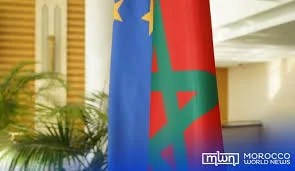
Rabat — The European Commission and Morocco are in discussions to formalize a new partnership aimed at strengthening cooperation on migration management and border control, European officials confirmed this week.
The European Commission said it is working with Rabat to “deepen” their bilateral relationship through an agreement modeled on existing deals with Tunisia, Egypt, and Jordan. These agreements set out commitments on both sides, providing financial and technical support in exchange for stronger border management and cooperation on curbing irregular migration.
At a press conference unveiling the EU’s Global Europe instrument, which seeks to double aid to North African countries in the next budget, Dubravka Suica, the EU Commissioner for Democracy and Demography, highlighted Morocco as a priority partner.
“We already have partnerships with many of them and are trying to strengthen them all. Currently, we are collaborating with Egypt, Tunisia, and Jordan. We are working on deepening our partnership with Morocco and will also begin working with Lebanon,” Suica said.
In recent years, the EU signed memoranda of understanding with Tunisia and Egypt during a surge of migrant arrivals in the Central Mediterranean. These agreements form part of the EU’s broader strategy to enhance regional stability while managing migration more effectively.
According to EU sources cited by Europa Press, Brussels aims to reach a similar agreement with Morocco. However, they noted that talks are still at an early stage, and no specific timeline has been set for finalizing the deal.
Against this backdrop, Morocco’s Minister of Foreign Affairs Nasser Bourita met in Brussels on Wednesday with Kaja Kallas, the EU’s High Representative for Foreign Affairs and Vice-President of the European Commission.
During their high-level meeting, both sides reaffirmed the depth of the Morocco–EU strategic partnership, describing it as grounded in a shared vision of stability, prosperity, and co-development. They recalled progress in various areas of cooperation, including security, trade, energy transition, and addressing shared challenges such as terrorism, irregular migration, and climate change.
Bourita and Kallas exchanged views on regional and international issues, particularly the situations in the Sahel, the Mediterranean, and the Middle East. They also shared their views on the importance of close coordination to confront current geopolitical challenges in a spirit of shared responsibility and open dialogue.
[ad_2]
Source link